

Termite inspection and treatment in Indianapolis
Termites live underground and tunnel into the wood of your home, often for years before anyone notices. Witts Pest Control inspects for active termites and damage, treats the colony, and recommends a yearly inspection so a new problem gets caught early.
Reviewed by Zac Kidwell, owner, Witts Pest Control. Updated October 2026.
Signs of termites to look for
Termites stay hidden, so you usually spot what they leave behind. Here's what to check.
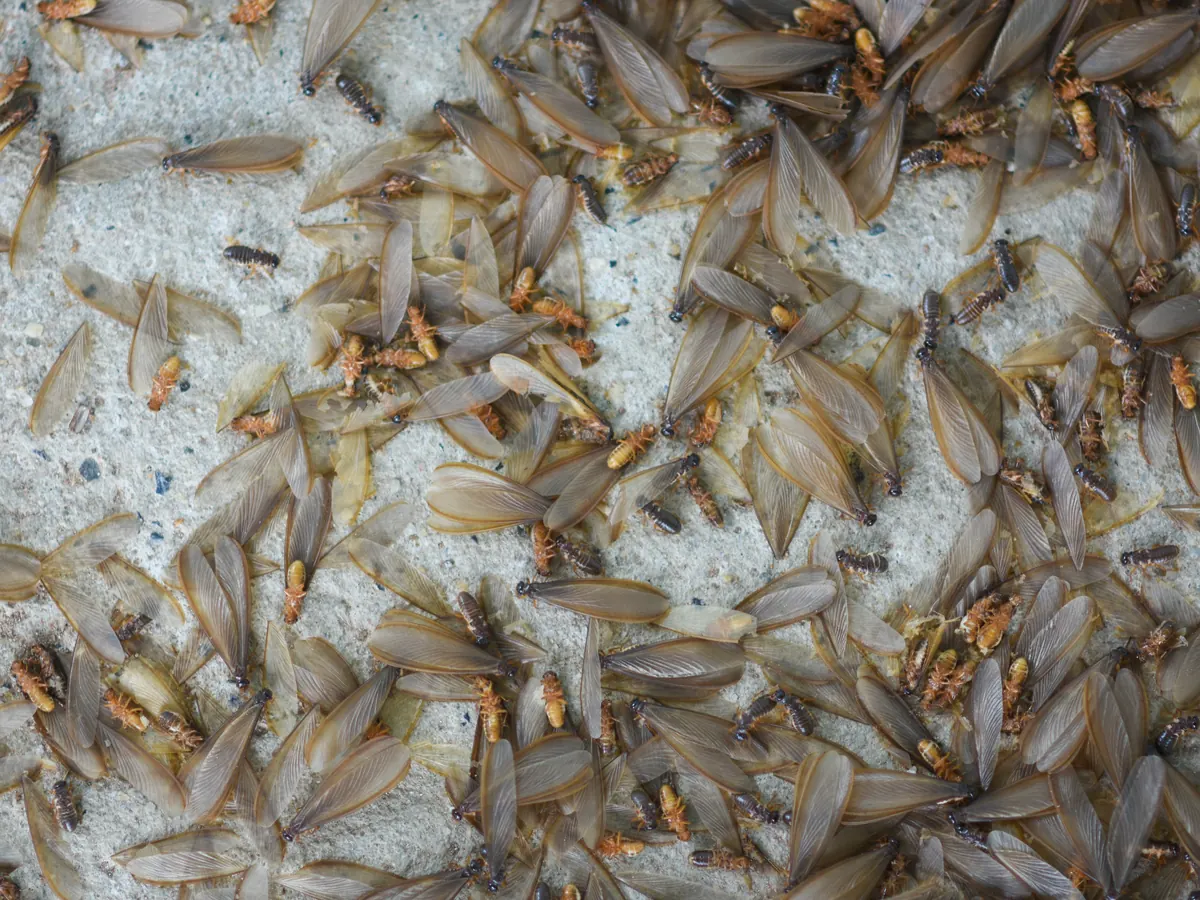
Swarmers or piles of wings
Winged termites swarm on warm spring days, then drop their wings. Check windowsills, doorways and light fixtures.
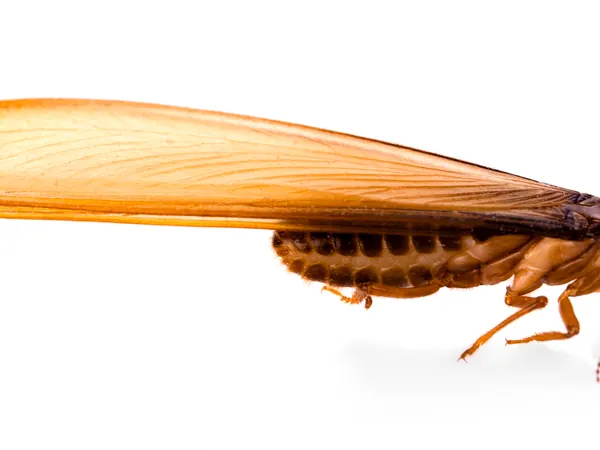
Termite or flying ant?
Termites have straight antennae, a thick waist and four wings of equal length. Flying ants have bent antennae and a pinched waist.
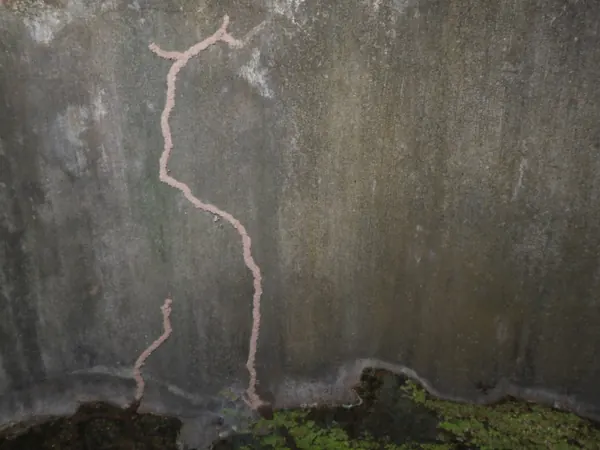
Mud tubes
Pencil-wide tunnels termites build from soil to wood. Check foundation walls, the crawl space and the sill plate.
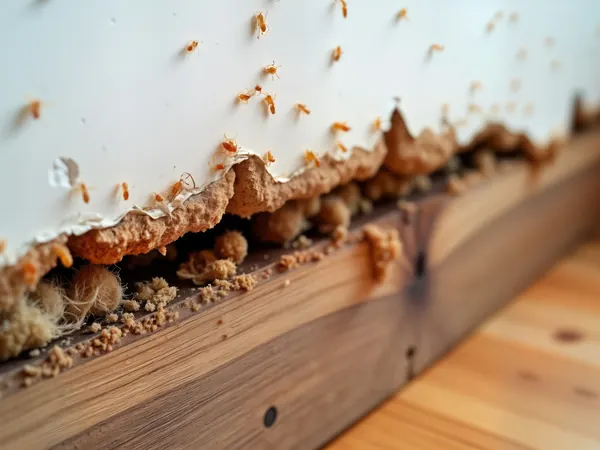
Hollow or crumbling trim
Tap baseboards and trim. Damaged wood sounds hollow, crumbles, or gives way under a screwdriver.
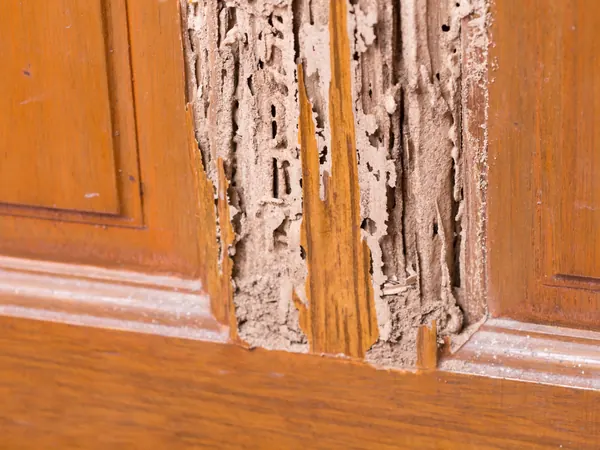
Chewed or sagging door frames
Door frames and window trim that sag, crumble, or doors that suddenly stick can mean termites in the framing.
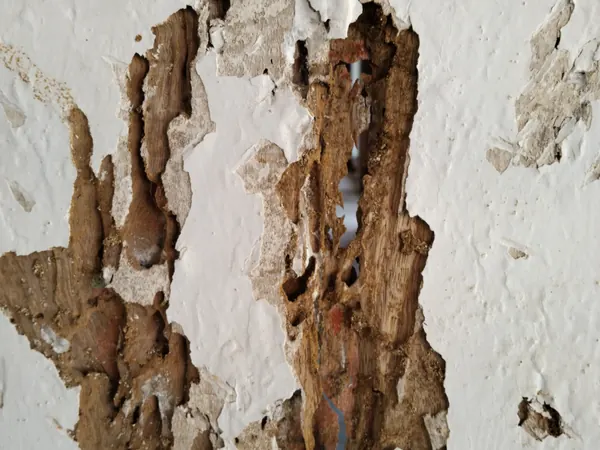
Bubbling or peeling paint
Termites eat the wood just under the surface. Paint can bubble, crack or flake where the wood behind it is hollow.
If you see a swarm on your property, call us for an inspection. If it looks like they're coming from a neighbor's yard, let your neighbor know too.
How treatment works
We start with an inspection to confirm termites, find where they're getting in and see how far they've spread. Then we explain the treatment, what it costs and any preparation it needs before we start. Preparation depends on the kind of treatment. Your technician will go over it with you in detail.
Termites or carpenter ants?
Both swarm and both damage wood. Termite swarmers have straight antennae, a thick waist and two pairs of wings the same length. Ants have bent antennae, a pinched waist and front wings longer than the back ones. Carpenter ants also leave sawdust behind; termites don't. Either way, we treat both.
Why inspect every year?
Termite damage is slow and hidden. A yearly inspection is the cheapest way to catch it before it turns into structural repair, especially if your property is wooded or swarms happen nearby every spring.
Questions about termites
When do termites swarm in Indiana?
Mostly in spring, on warm days after rain. A swarm near your house is the most common early warning.
Do I need to leave during termite treatment?
Usually not. Your technician will explain any preparation and access we need, like clearing space along walls or in the crawl space.
How much does termite treatment cost?
It depends on the size of the house, the construction and how bad the problem is, so we inspect before quoting. Estimates are free.